Breathwork is one of those words that either means nothing to you or sounds like something you'd find on a retreat in Bali where everyone wears white. Neither reaction is wrong, but the practice itself is more grounded and more interesting than the branding suggests.
At its simplest: breathwork is any practice where you consciously change your breathing pattern to shift your physical and mental state. Not "take a deep breath". Structured, intentional breathing techniques that produce measurable effects on your nervous system.
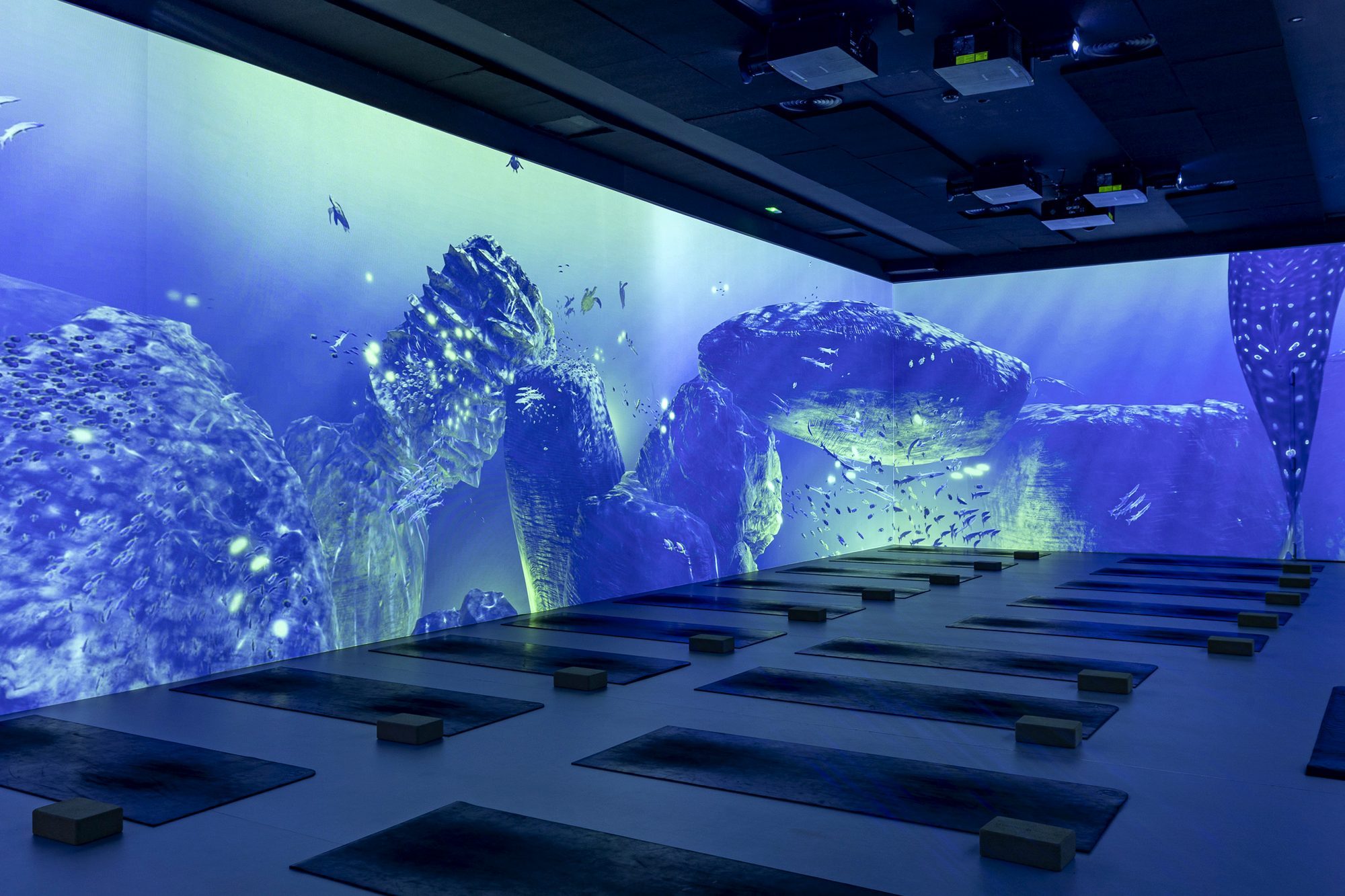
Here's what it actually involves, what it feels like, and why doing it in a 360° immersive room changes things.
What breathwork is (and isn't)
Breathwork isn't deep breathing. You take deep breaths all day without anything happening. Breathwork is about specific patterns. Speed, rhythm, depth, ratio of inhale to exhale, and breath holds. That trigger specific physiological responses.
There are two broad categories:
Activating breathwork uses rapid, connected breathing patterns (no pauses between inhale and exhale) to increase oxygen intake and shift blood chemistry. Techniques like Holotropic Breathwork, Alchemy Breath, and some Wim Hof patterns fall here. The effect is stimulating. Increased energy, emotional release, altered perception.
Calming breathwork uses slow, extended exhales and controlled pauses to activate the parasympathetic nervous system. Box breathing (4-4-4-4), coherence breathing (5-5), and extended exhale techniques fall here. The effect is grounding. Reduced heart rate, lower cortisol, deeper calm.
Most sessions at studios like SABDA combine elements of both: starting with calming patterns to settle in, building to an activating peak, then returning to slow breathing to integrate.
The science (skip if you don't care)
If you're looking for breathwork barcelona, this guide covers what actually matters. The core mechanism is the vagus nerve. The longest cranial nerve, running from brainstem to abdomen, controlling the body's rest-and-digest response. Extended exhales stimulate the vagus nerve directly. This is measurable: heart rate variability (HRV) increases, cortisol drops, blood pressure stabilises.
For activating breathwork, the mechanism is different. Rapid breathing alters blood CO2 levels. When CO2 drops, blood pH rises (respiratory alkalosis), which can cause tingling, temperature changes, and shifts in perception. This isn't dangerous for healthy people. It's a temporary, self-limiting biochemical state that resolves as soon as you return to normal breathing.
A 2023 Stanford study comparing breathwork to meditation found that cyclic sighing (a specific breathwork technique) produced greater improvements in mood and reduced respiratory rate than mindfulness meditation. The researchers noted that breathwork's advantage may be that it gives the mind a task (controlling breath) rather than asking it to be still.
What it feels like (honestly)
The first 5 minutes of an activating breathwork session feel like hard work. You're breathing faster than normal, your hands might tingle, and your brain is loudly questioning why you're doing this.
Around the 10-minute mark, things shift. The tingling spreads. You might feel temperature changes. Hot face, cold hands, or the reverse. Some people feel waves of emotion. Sadness, joy, frustration, relief. That come and go without narrative attached. You're not thinking about a specific thing. The feeling just arrives and passes.
At the peak (usually 15-20 minutes in), many people describe something that sounds dramatic but is genuinely common: a sense of expansion, dissolution of body boundaries, visual patterns behind closed eyelids. It's not psychedelic in the drug sense, but it's more than "relaxation." Your conscious mind takes a back seat.
The integration phase (last 10-15 minutes) brings you back to slow breathing. Most people feel deeply calm. The post-breathwork state is often described as "wrung out but clear."
A calming session is less intense but not less valuable. 20 minutes of extended exhale breathing reliably shifts people from anxious to calm. It's one of the few interventions that works in real-time rather than building up over weeks of practice.
Who it's NOT for
Breathwork techniques that alter blood chemistry should be avoided by:
- Pregnant people
- Anyone with cardiovascular conditions (including uncontrolled high blood pressure)
- People with epilepsy
- Anyone in the acute phase of a psychiatric condition
Calming breathwork (slow, gentle techniques) is safe for nearly everyone. If in doubt, mention any health conditions to the facilitator before the session.
The immersive difference
Breathwork in a quiet room with your eyes closed is effective. Breathwork inside a 360° projection room with Dolby Atmos spatial audio is a different category.
At SABDA, the visuals and audio are calibrated to the breathing phases. During activating breathwork, the projections intensify. Shifting colours, expanding geometries, patterns that pulse with the group's rhythm. During the calming phase, everything slows: deep blues, gentle movement, tones that feel like they're holding you.
The spatial audio means the facilitator's cues come from all around you rather than from one direction. The music wraps. The bass frequencies vibrate through the floor. You're not just doing a breathing exercise. You're inside an environment that's been designed to support every phase of the experience.
People who've done breathwork in regular studios and then try it at SABDA consistently say the immersive environment makes the experience 2-3x more intense. The visual and auditory stimulation seems to lower resistance, you drop in faster and go deeper.
Breathwork techniques you'll encounter
Box breathing (4-4-4-4): Inhale 4 counts, hold 4, exhale 4, hold 4. Military-origin. Good for acute stress.
Coherence breathing (5-5): 5-second inhale, 5-second exhale. Synchronises heart rate with breath rate. The most studied calming technique.
Cyclic sighing: Extended exhale with a double inhale (in-in-out). The Stanford technique. Specifically good for mood improvement.
Connected breathing: No pause between inhale and exhale. Used in activating practices. The pattern that produces the strongest physical sensations.
Wim Hof breathing: 30 rapid breaths followed by a breath hold on the exhale. Designed to increase cold tolerance and reduce inflammation. Often combined with ice bath. Which is exactly how SABDA pairs it.
Try it in Barcelona
SABDA's breathwork sessions run multiple times per week in the Eixample (C/Muntaner 83B, 10 min from Universitat metro). Sessions range from calming (Reset & Calm) to activating (Alchemy Breath). All levels welcome. No experience needed.
3 classes for €50. Combine breathwork with sound healing or ice bath for the full range.
Related: What Is Sound Healing? | Ice Bath in Barcelona