SABDA vs a Regular Yoga Studio: What's Actually Different (2026)
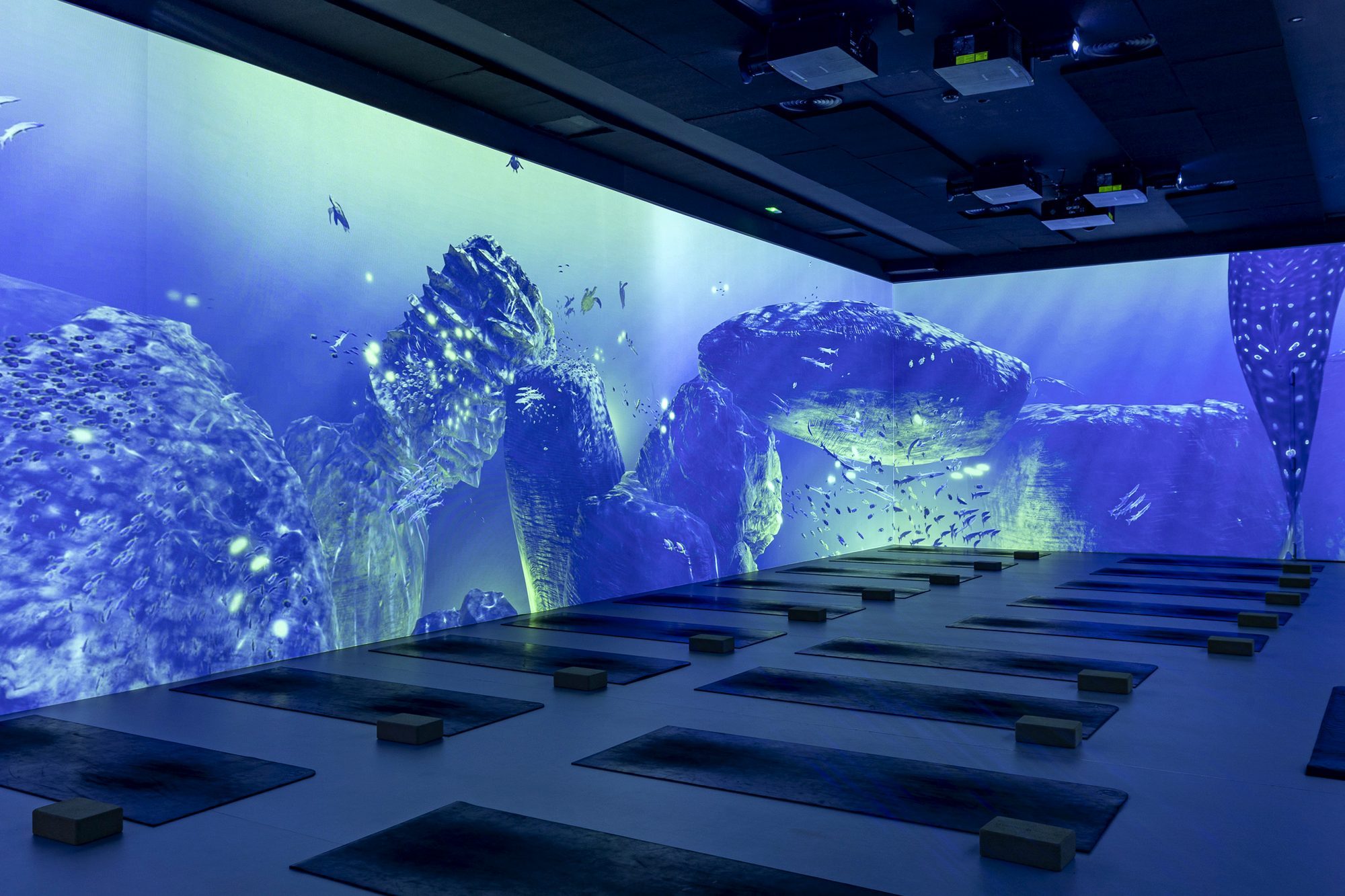
If you've been doing yoga at a regular studio in Barcelona, or anywhere, and you're curious about SABDA, the honest question is: what's actually different? Is it just yoga with a projector? Is it a gimmick with good marketing? Or does doing yoga inside a 360° immersive room with Dolby Atmos spatial audio genuinely change the experience?
Having seen hundreds of people try both, here's what we can say: it's different. But not in the way most people expect. This article explains what changes, what stays the same, and who should care.
What stays the same
The yoga is real yoga. SABDA's teachers are qualified, experienced yoga instructors. The sequences, the alignment cues, the breathing, the savasana. It's the same practice you'd find in any good studio. We don't water down the yoga to make room for the technology. Vinyasa is vinyasa. Hatha is hatha. Yin is yin.
You still need to show up consistently. No amount of immersive technology replaces the simple discipline of getting on the mat 2-3 times a week. A regular studio with a great teacher you see every Thursday is worth more than an occasional SABDA class. Consistency beats novelty.
The teacher matters more than the room. A mediocre teacher in an immersive room is still a mediocre teacher. SABDA's teachers are good. But so are teachers at Frizzant, Yoga One, and several other studios in Barcelona. The room amplifies good teaching. It doesn't replace it.
What changes
Your attention
This is the biggest difference, and it's not subtle. In a regular studio, your mind wanders. You think about dinner. You notice the person next to you doing a better warrior III. You hear the traffic outside. You check the clock. Your brain is multitasking, even during yoga.
In the immersive room, something different happens. The 360° projections give your visual field something to process that isn't competing information. The spatial audio removes external noise entirely. Your brain stops scanning for distractions because there aren't any. The result: you reach a focused, present state 10-15 minutes faster than in a standard studio.
This isn't mystical. It's basic neuroscience of attention. When the environment reduces competing stimuli and provides gentle, non-demanding sensory input, your default mode network quiets down faster. The technology does what your discipline is supposed to do, but it does it for you.
The quality of each repetition
When your attention is genuinely present during a chaturanga or a balancing pose, the quality of the movement changes. You notice when you're compensating, when your core disengages, when your breath gets shallow. In a regular studio, these moments slip past because your mind is somewhere else.
In the immersive room, the heightened focus means each pose gets more of your awareness. Over a 60-minute class, that adds up. You get more benefit from fewer classes because each class has more quality attention in it.
Savasana
The final relaxation in a regular studio: you lie on the floor. Someone's mat creaks. There's a siren outside. The teacher plays a Spotify playlist through a single speaker.
Savasana at SABDA: the projections slow to gentle, breathing patterns of light. The Dolby Atmos audio surrounds you with ambient frequencies that vibrate through the floor. Your eyes are closed but the light shifts are visible through your eyelids. The room has no external sound. For 5-10 minutes, you're in something closer to a sensory float tank than a yoga class. People regularly report falling into a state they can't quite describe. Not sleep. Not meditation. Something between.
The emotional dimension
This is the part that's hardest to explain and easiest to experience. Something about being inside an immersive environment during movement creates an emotional availability that doesn't happen in a standard studio. People cry in class. Not because they're sad. Because something releases. The combination of physical movement, focused attention, and enveloping sensory input seems to lower the emotional defences that daily life keeps active.
This doesn't happen every class. It doesn't happen to everyone. But it happens often enough that we mention it. If you've ever had an unexpectedly emotional moment during yoga, imagine that with the environmental intensity turned up.
Pricing comparison
| SABDA | Typical BCN studio | |
|---|---|---|
| Single class | €18 (drop-in) | €15-22 |
| Intro pack | 3 for €50 (€18/class) | 3-5 classes €40-75 |
| Monthly unlimited | €130/mo (Immerse) | €80-140/mo |
| Monthly mid-tier | €99/mo (Flex, 4 classes) | €50-80/mo |
SABDA isn't the cheapest option in Barcelona. It's comparable to mid-to-premium studios. The question isn't whether it costs more. It's whether the immersive environment delivers enough additional value per class to justify the price. For most people who try it, the answer is yes, but only they can make that call.
Who should try SABDA (and who shouldn't)
Try SABDA if: You've been doing yoga for a while and feel like classes have become routine. You want to deepen your practice without changing styles. You're curious about how environment affects your yoga experience. You want the best savasana in Barcelona.
Skip SABDA if: You're looking for the cheapest yoga in town. You prefer outdoor or heated yoga. You want a studio where you know everyone's name and chat before class (SABDA's vibe is more individual, more introspective). You want extensive hands-on adjustments (dark room = less physical correction).
The honest take: SABDA doesn't replace your regular studio. It adds something that your regular studio can't offer. The best version is both: your regular studio for consistency and community, SABDA for the classes where you want something that goes deeper.
What members say (the recurring themes)
After hundreds of conversations with people who've done yoga at both SABDA and regular studios in Barcelona, three comments come up consistently:
"I get into the zone faster." The most common observation. People who normally spend 15-20 minutes mentally arriving at a regular class report being fully present within 5 minutes at SABDA. The environment does the work that discipline usually has to do.
"Savasana is different here." This comes up almost universally. The combination of darkness, spatial audio, and slow visual movement during final relaxation creates a depth of rest that people don't experience elsewhere. Several members have described it as "the closest thing to floating without water."
"I notice my alignment more." Without mirrors (paradoxically), people report being more aware of their body's position. The theory: mirrors create visual feedback that's external. The immersive environment creates a state of internal focus that makes proprioceptive awareness stronger. You feel your body instead of watching it.
The practical differences
Class size. SABDA classes typically have 15-25 students. Some Barcelona studios pack 30-40 into a room. Smaller classes mean more space, more attention from the teacher, and less distraction from neighbours.
Temperature. The immersive room is climate-controlled at a comfortable temperature. No hot yoga surprises. No freezing winter studios.
Sound quality. This sounds like a minor detail until you experience it. Dolby Atmos spatial audio means the teacher's voice is clear from every position in the room, and the music surrounds rather than playing from one direction. In a regular studio, if you're at the back, the teacher sounds distant and the music is either too loud or too quiet.
Post-class. Showers and changing rooms available. The transition back to Barcelona's streets is part of the experience: you step from a dark, quiet, immersive space into the noise and light of Muntaner street. The contrast makes you aware of how different your state is.
Try 3 classes for €50 → | See the class schedule →
Related: Yoga in Barcelona Guide | Your First Class at SABDA | Best Yoga Studios in Barcelona